My First Etching: Process, Intuition, and Returning to Printmaking
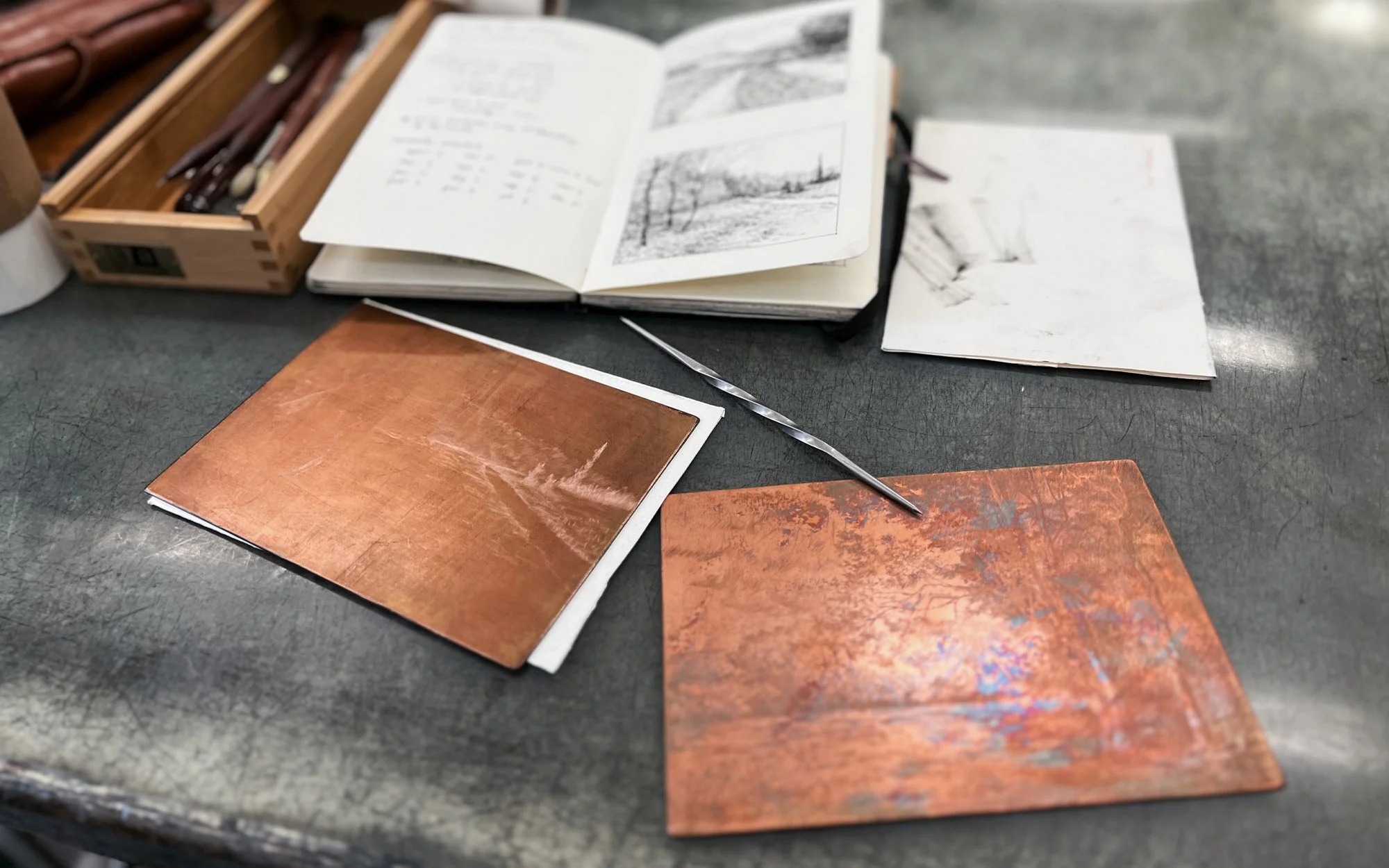
From the Archives:
This post is part of my From the Archives series, where I revisit earlier writings that continue to resonate with my current practice. Although written a few years ago, the themes and reflections here still feel relevant—both in my work and in my life, particularly in relation to my ongoing work in monotype.
This entry documents the making of my very first etching—a process rooted in traditional printmaking—which, until recently, remained the only one I had ever produced. This month, however, I’ve returned to etching, and I look forward to sharing more about this process in the near future. For now, it feels right to return to where it all began.
March 5, 2020
Since I began sharing my sketches on Instagram, I received many comments from artists around the world suggesting I would take naturally to etching. I studied lithography in college—a printmaking process I loved—but didn’t continue after moving to NYC. Etching, however, always intimidated me. It carried a sense of permanence, as if no mistakes could be made, and the ever-present mention of “chemicals” only added to its seriousness.
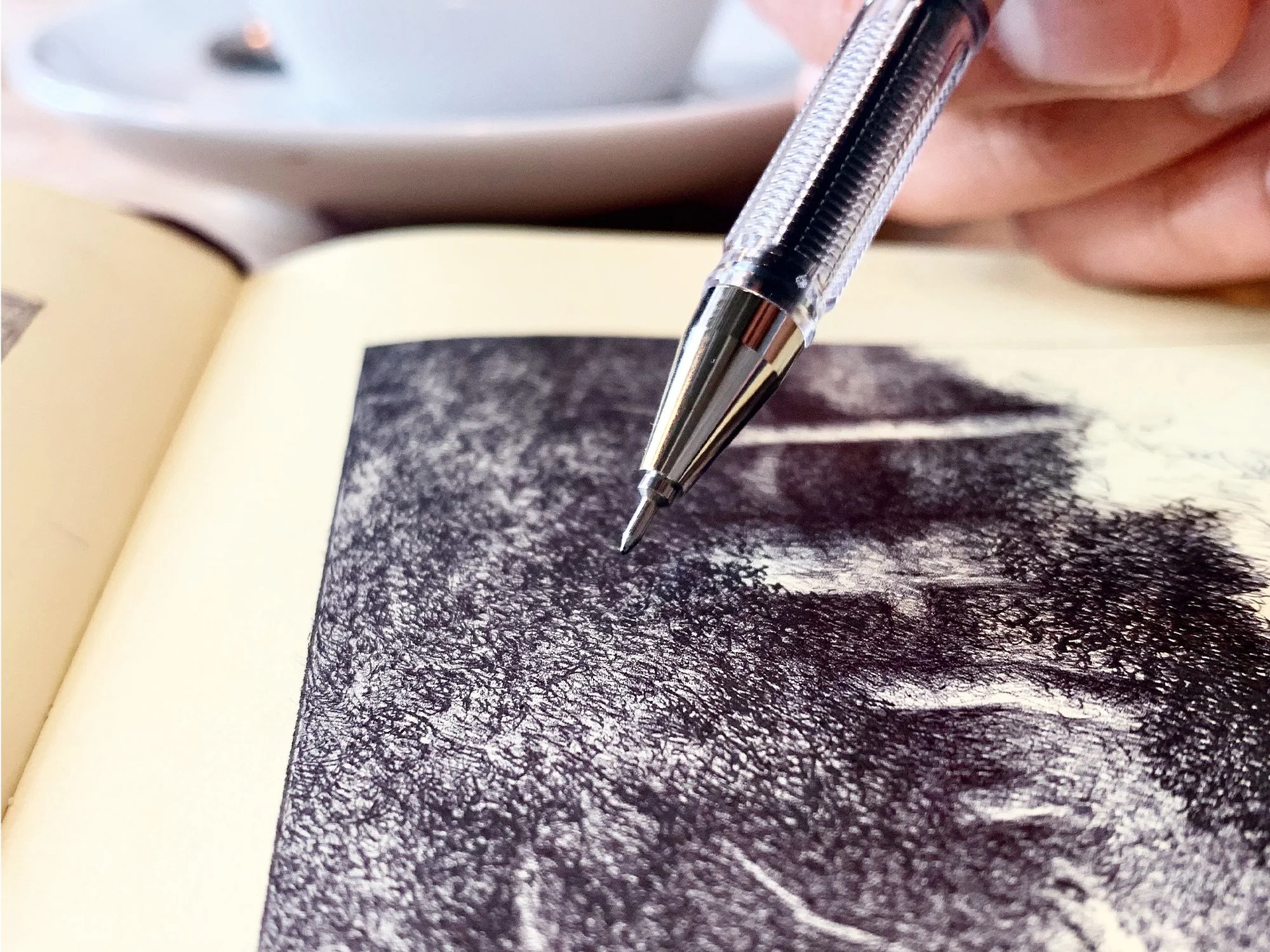
Over time, I grew more comfortable with less forgiving tools—especially pen and ink. Drawing consistently, developing my touch, and working in monotype eventually led me here: enrolling in an etching class and beginning my first copper plate etching.
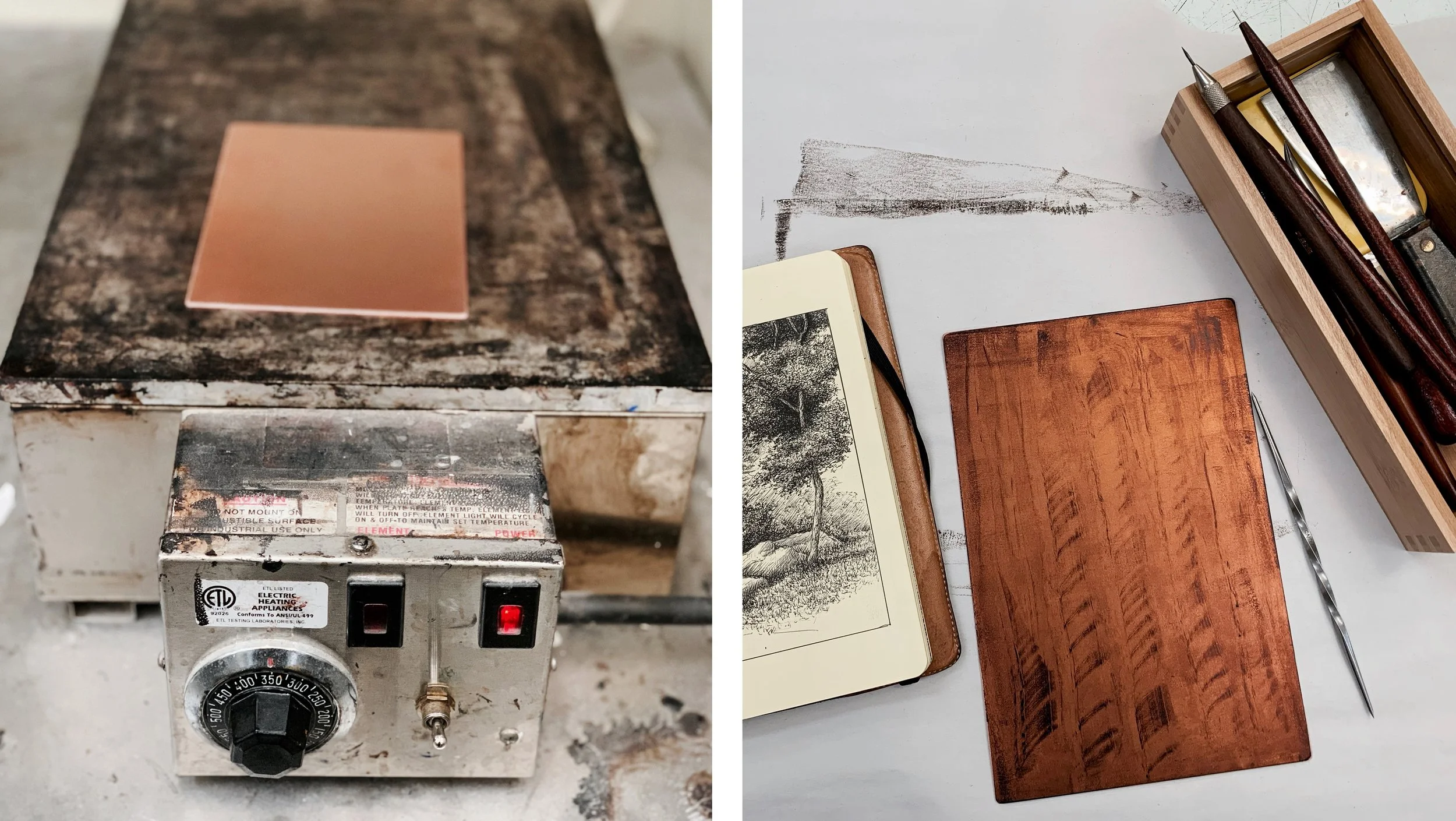
I wanted to share a few moments from the etching process, which I found to align naturally with my more methodical way of working. It also allowed me to draw on the sensitivity and control I’ve developed over the years working with pen.
The process begins with preparing the copper plate. Its edges and corners are sanded down so they won’t tear the paper under the pressure of the press. The plate is then heated, and once warm, a waxy substance known as hard ground is applied and rolled into a thin, even layer. After cooling, the plate is ready to be drawn on.
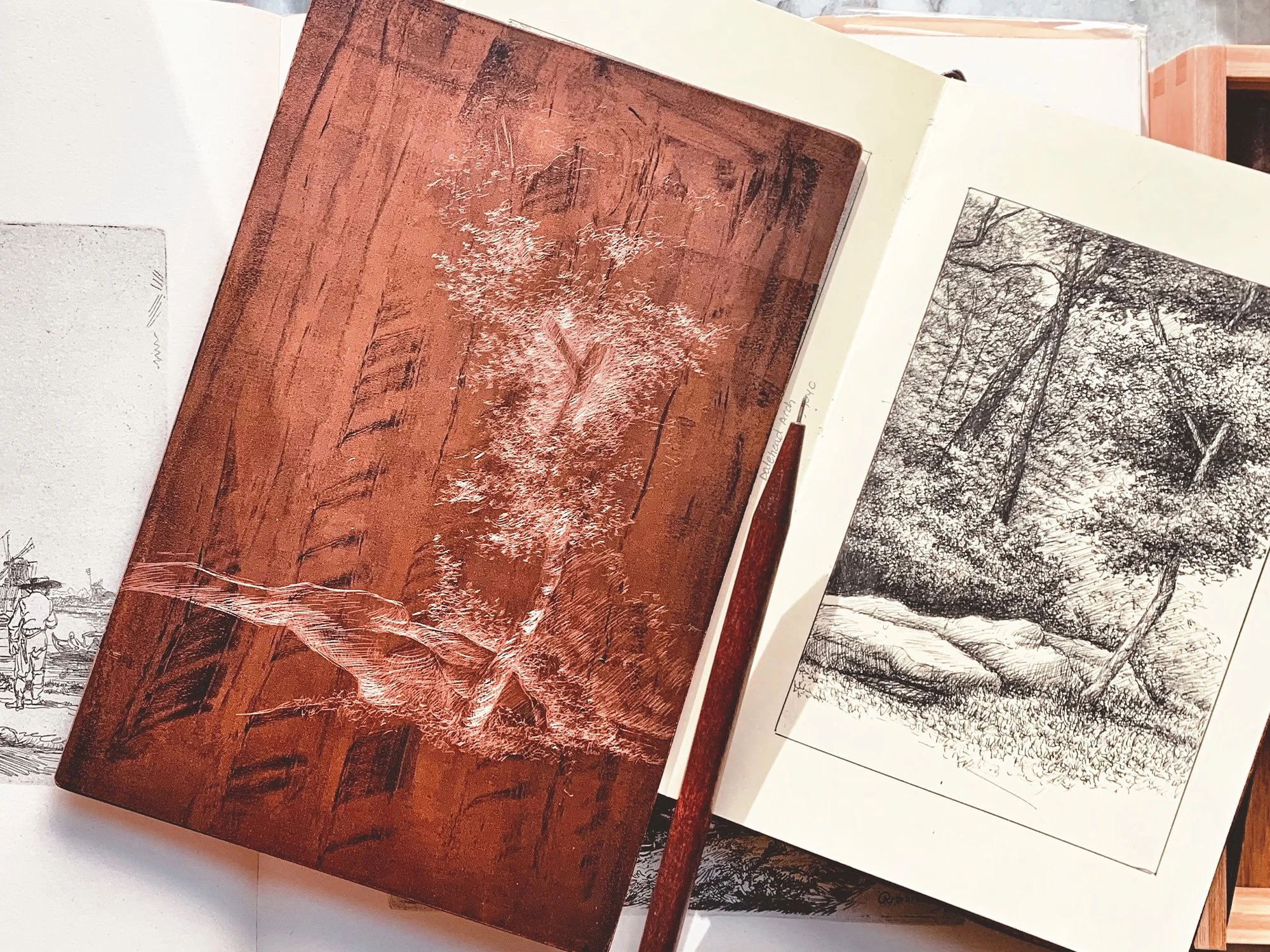
I chose one of my looser drawings as a starting point. For this first etching, I wasn’t interested in getting lost in detail. Using an etching needle, I drew directly into the surface, carefully scratching through the ground. The goal is to lift the wax—not to carve deeply into the plate itself.
At first, the sensation of scratching through the ground felt unfamiliar, but it didn’t take long to settle into a rhythm. Soon, it began to feel much like drawing—measured, responsive, and intuitive.
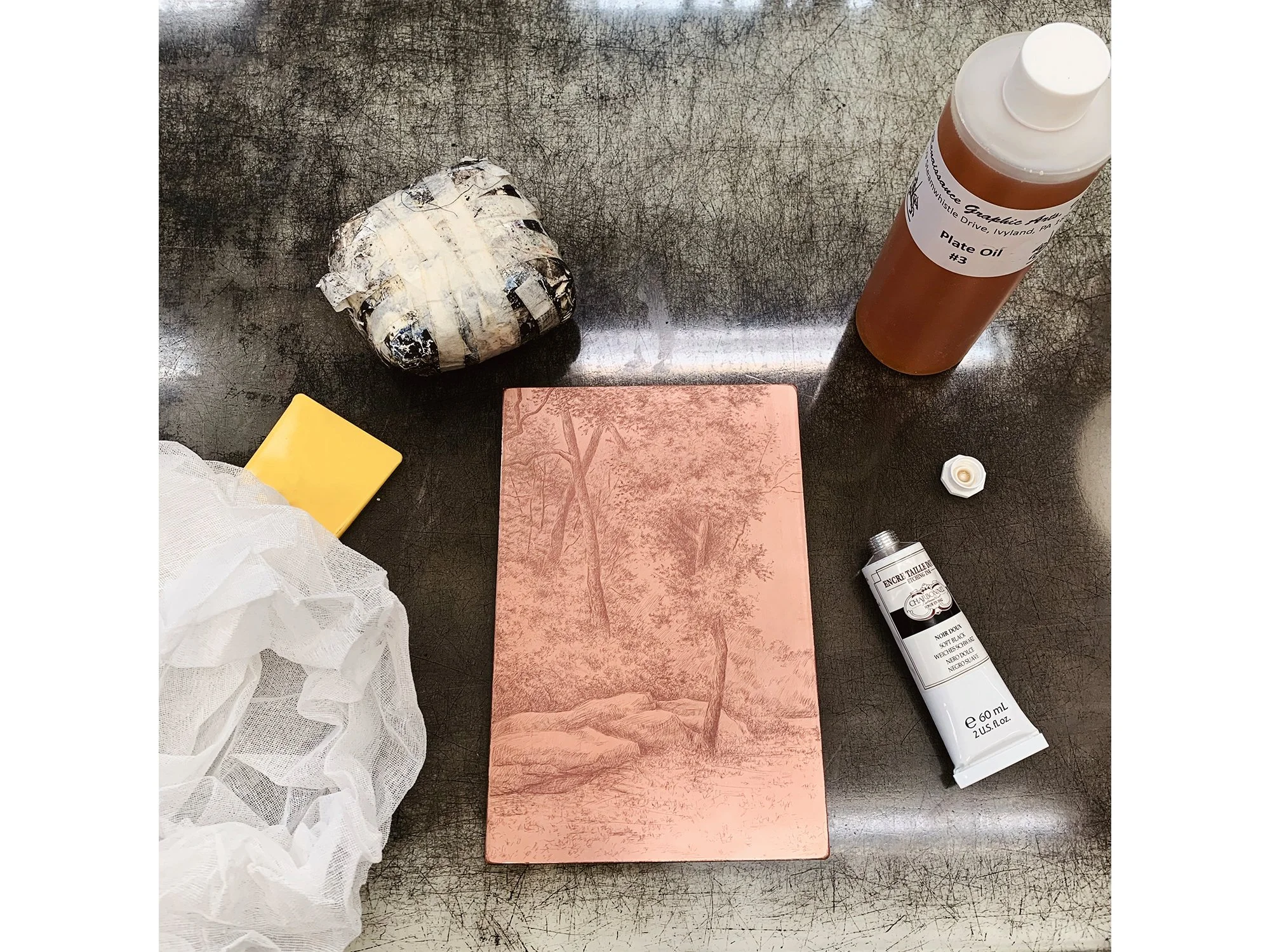
The areas left covered in hard ground are protected during the acid bath, while the exposed lines are “bitten” by the acid, creating grooves that will later hold ink. In the image above, the copper plate has already gone through a forty-minute acid bath and has been fully cleaned of the ground. At this stage, it’s ready to be inked and printed.
Show time. The plate goes through the press—my first etching print revealed as the paper is lifted.
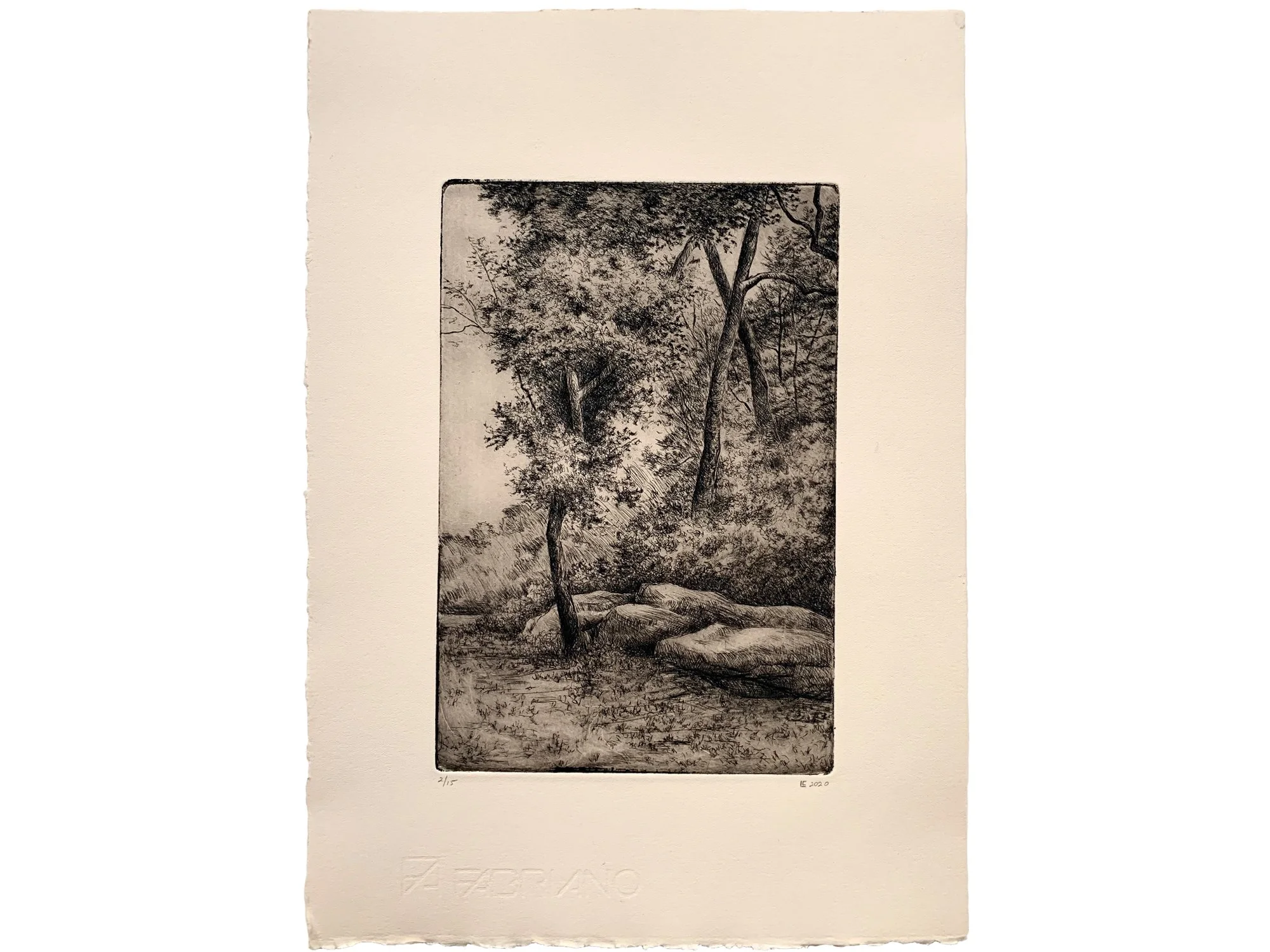
Untitled, Etching No. 1, 2020, hard ground etching on Rosaspina paper, image 9 x 6 inches, sheet 13 1/2 x 10 inches. Edition of 15.
Here it is: the first print. And to my surprise, it works. It printed darker than I expected, which I see as a strength. I’m still deciding whether to leave the plate as is or continue working into it to build a broader range of tones within the print. Time will tell.
As I return to etching now, I’m interested in how it might begin to intersect with my monotype practice.